
A 60-day deadline sounds straightforward until you're the one figuring out when the clock actually started. I've watched covered entities lose sleep over whether "discovery" means the moment the intrusion happened, when the IT team noticed something odd, or when someone finally confirmed it was a breach. The answer matters because getting it wrong doesn't just mean a late notification—it can turn a manageable incident into an enforcement action.
The HIPAA breach notification rule establishes clear timelines, but the implementation is where organizations stumble. The 60-day period begins at discovery, not at the breach itself. That distinction creates complexity, and in my experience, the mishandling of this timeline is one of the most common patterns I see in post-breach investigations.
What Constitutes Discovery Under HIPAA
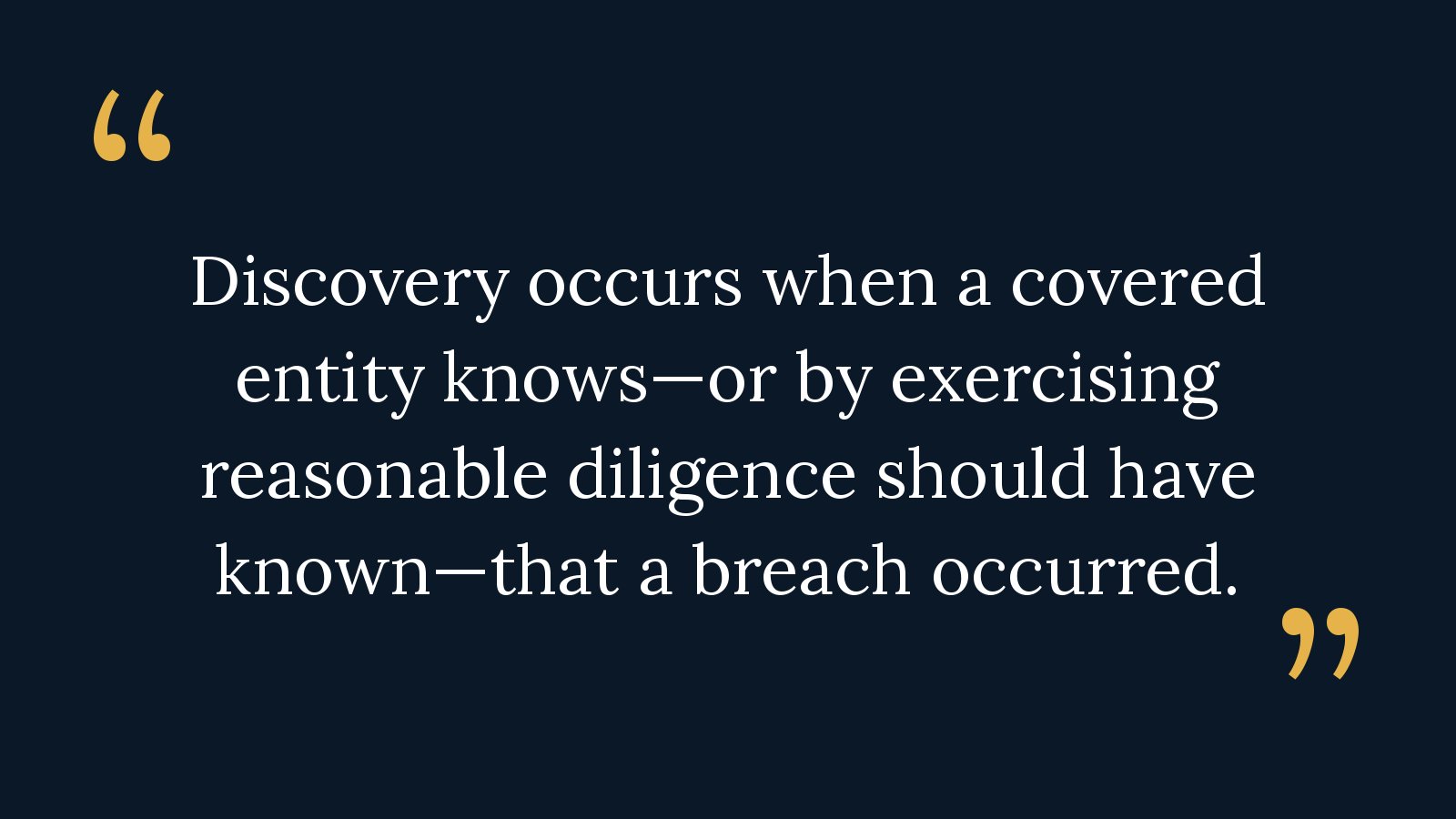
Discovery occurs when a covered entity or business associate knows—or by exercising reasonable diligence should have known—that a breach occurred. This is not the same as suspecting something might be wrong. Discovery is the point at which you have enough information to conclude that protected health information was acquired, accessed, used, or disclosed in a manner not permitted under the Privacy Rule.
The "reasonable diligence" standard is where this gets complicated. If your monitoring systems flagged unusual database access three weeks before your security team investigated, OCR may consider the breach discovered at the time of the flag, not when someone finally looked into it. This isn't theoretical—I've seen enforcement cases hinge on whether the organization had sufficient monitoring in place and whether they acted on available information with appropriate urgency.
The Difference Between Suspicion and Discovery
Organizations often confuse initial detection with formal discovery. You don't start the 60-day clock the moment an endpoint alert fires or someone reports a potentially missing laptop. Discovery requires a reasonable basis to believe that PHI was actually compromised. The distinction matters because premature notification can cause unnecessary alarm, while delayed investigation can push you past the deadline.
The pattern I see is this: organizations either treat every security event as a breach and over-notify, or they use "we're still investigating" as cover for inaction. Neither approach holds up well. OCR expects you to conduct a prompt investigation and reach a determination. If that investigation reasonably should have concluded within days but took weeks, you may be deemed to have discovered the breach earlier than you claimed.
When Business Associates Discover First
If a business associate discovers a breach, they must notify the covered entity within 60 days of their own discovery. This creates a chain reaction: the business associate's 60-day clock starts at their discovery, and the covered entity's 60-day clock starts when they receive notification from the BA. This can compress timelines significantly if the BA uses most of their 60 days before notifying you.
I've worked with covered entities who received breach notifications from business associates on day 58 of the BA's timeline. That left them with 60 days from receipt to notify individuals and OCR—but only two days of runway to understand the scope, secure their own environment, and prepare communications. This is why your business associate agreements should require notification within a much shorter window than the regulatory maximum. The standard Business Associate Agreement template includes notification provisions, but many organizations accept vendor paper without negotiating these terms.
The 60-Day Notification Requirement
Once discovery occurs, you have 60 calendar days to notify affected individuals. The notification must be written and sent by first-class mail, or if the individual has agreed to electronic notice, by email. The 60-day period is not a suggestion or a target—it's a regulatory deadline. Missing it triggers HIPAA violation penalties separate from the underlying breach.
The content requirements for individual notification are specific. You must describe what happened, the types of information involved, steps individuals should take to protect themselves, what your organization is doing in response, and contact information for further questions. Generic templates don't usually meet the standard. OCR expects the notification to be written in plain language and tailored to the specific incident.
Substitute Notice When You Can't Reach Individuals
If you lack current contact information for individuals, or if the cost of notification would exceed a certain threshold, you may use substitute notice methods. For fewer than 10 individuals with insufficient or out-of-date contact information, you can use phone calls or other alternative means. For larger numbers, substitute notice involves a conspicuous posting on your homepage for at least 90 days and notification to major media outlets in the affected geographic area.
Substitute notice is not a shortcut. It's a fallback when you genuinely cannot reach people, and OCR will scrutinize whether you made reasonable efforts to obtain current contact information before resorting to it. The organizations that get into trouble here are those who use substitute notice because it's easier, not because it's necessary.
Notification to the Secretary and to Media
In addition to notifying individuals, you must notify the Secretary of Health and Human Services. The timing depends on the size of the breach. For breaches affecting 500 or more individuals, you must notify the Secretary within 60 days of discovery—the same timeline as individual notification. These breaches also require notification to prominent media outlets in the affected area.
For breaches affecting fewer than 500 individuals, you maintain a log and submit it to the Secretary annually, no later than 60 days after the end of the calendar year. This doesn't mean small breaches are less serious—it means the reporting mechanism is different. Many organizations treat sub-500 breaches casually because they don't trigger immediate public disclosure. That's a mistake. OCR reviews those annual logs, and patterns of small breaches can indicate systemic failures in your HIPAA risk assessment or security posture.
The "Wall of Shame" and Public Disclosure
When you report a breach affecting 500 or more individuals to OCR, it appears on the public breach portal—colloquially known as the "wall of shame." This is not a punitive measure; it's a transparency requirement. But the public relations impact is real. Your breach will be searchable, categorized by type and size, and visible to patients, competitors, and regulators.
The media notification requirement adds another layer. You must notify major broadcast, print, or online media in the states or jurisdictions where affected individuals reside. OCR doesn't define "major" with precision, but the expectation is that you make a reasonable effort to reach outlets that would inform the affected population. Sending a press release to a single wire service usually isn't sufficient if your breach affects multiple states.
Need Help Preparing for Breach Response?
Carl speaks to healthcare organizations about building breach response programs that hold up under pressure—before the 60-day clock starts ticking. His sessions are built on real incidents, not theoretical frameworks.
Book Carl to SpeakWhat Counts as a Breach (and What Doesn't)
Not every unauthorized disclosure triggers HIPAA breach notification. The rule includes exceptions, but they're narrower than most people assume. A breach is an impermissible acquisition, access, use, or disclosure of PHI that compromises the security or privacy of the information. The key question is whether the incident poses a significant risk of financial, reputational, or other harm to the individual.
There are three statutory exceptions: unintentional acquisition or access by a workforce member acting in good faith within scope of authority, inadvertent disclosure among authorized persons at the same covered entity, and disclosures where the recipient couldn't reasonably have retained the information. These exceptions are fact-specific. Emailing the wrong patient file to another clinician in your practice might qualify; emailing it to someone outside your organization almost never does.
The Risk Assessment That Determines Breach Status
If an incident doesn't fall under one of the three exceptions, you must conduct a risk assessment to determine whether it's a reportable breach. This assessment evaluates four factors: the nature and extent of PHI involved, who received it, whether it was actually acquired or viewed, and the extent to which risk has been mitigated. OCR's guidance makes clear that this assessment should be thorough and documented.
The default assumption is that an impermissible disclosure is a breach unless the risk assessment demonstrates a low probability of compromise. Organizations that take the opposite approach—assuming no breach unless proven otherwise—set themselves up for enforcement. I've reviewed incidents where the initial risk assessment was cursory, concluded "low risk" without real analysis, and later became evidence of willful neglect when the facts came to light.
Common Mistakes That Turn Breaches Into Enforcement Actions
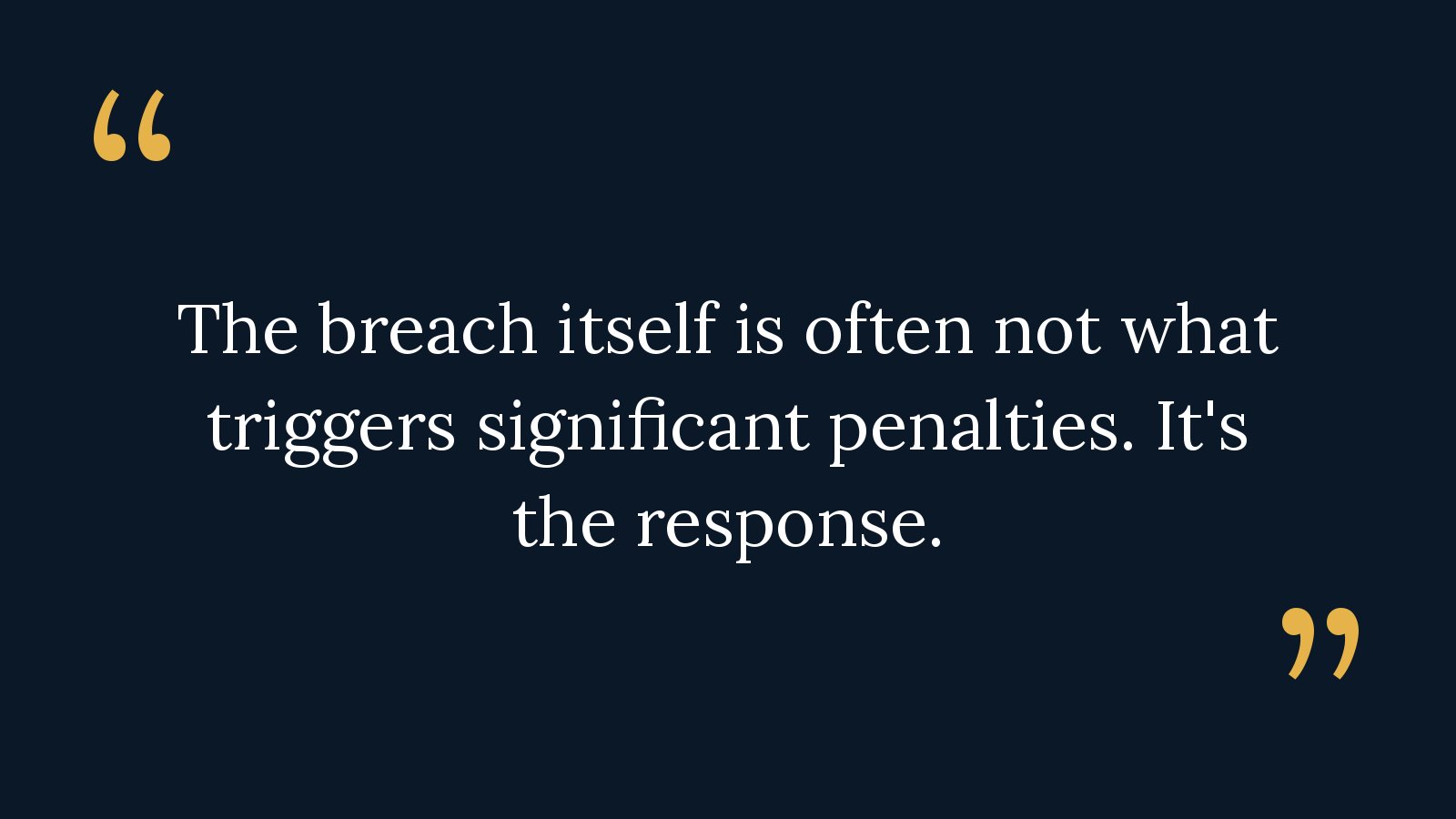
The breach itself is often not what triggers significant penalties. It's the response. OCR looks at how you handled discovery, whether you met notification deadlines, and whether your underlying compliance program was adequate. A breach combined with a botched response signals deeper problems.
The first mistake is delay in conducting the breach risk assessment. You don't have unlimited time to investigate. If your investigation drags on for weeks without progress, OCR may determine that you failed to exercise reasonable diligence and should have discovered the breach earlier. The second mistake is treating the 60-day notification deadline as flexible. It's not. If you notify on day 62, you've violated the rule, regardless of whether the delay seemed minor at the time.
Inadequate or Misleading Notifications
I've seen breach notifications that were so vague they provided no useful information to affected individuals, and others that downplayed the severity to avoid reputational damage. Both approaches create legal exposure. The notification must be accurate, complete, and written in plain language. If you misrepresent the scope of the breach or the types of information involved, that becomes a separate violation.
Another pattern: organizations that send legally compliant but practically useless notifications. The letter checks all the regulatory boxes but is written in dense compliance language that no patient could understand. OCR's plain language requirement is not a formality. If your notification reads like it was written by and for lawyers, it doesn't meet the standard.
Failing to Address Root Causes
OCR's investigation doesn't stop at whether you met notification deadlines. They examine why the breach happened and whether you had adequate safeguards in place. If the breach occurred because of a known vulnerability you failed to address, or because you lacked basic security controls, the enforcement action will reflect that. This is where the HIPAA Security Rule intersects with breach notification—your technical, administrative, and physical safeguards are under scrutiny.
The organizations that fare worst in enforcement are those who treat breach notification as a standalone compliance task rather than part of a broader security and privacy program. If you can't demonstrate that you conducted regular risk assessments, had policies in place, trained your workforce, and monitored for compliance, the breach notification violation becomes evidence of systemic failure.
Speaking on Healthcare Privacy and Breach Response
Carl delivers keynotes on HIPAA compliance, breach response, and building programs that withstand regulatory scrutiny. His sessions are grounded in real-world enforcement patterns and designed for healthcare executives who need practical guidance. See all keynote speaking topics or reach out about your event.
Book Carl for Your EventPatterns in Enforcement: What OCR Actually Cares About
OCR publishes resolution agreements and enforcement actions, and the patterns are consistent. They pursue cases where there was a failure to conduct a risk assessment, where notification was late or incomplete, and especially where the breach revealed underlying compliance failures. The size of the breach matters, but so does the organizational response.
One pattern I see repeatedly: organizations that had prior breaches and failed to correct the underlying issues. If you had a breach involving unencrypted devices and then have another breach involving unencrypted devices two years later, OCR will conclude that you didn't take corrective action seriously. The penalties in those cases are significantly higher because the violation is treated as willful neglect.
Another factor is cooperation. Organizations that self-report, conduct thorough investigations, and demonstrate genuine corrective action tend to fare better in enforcement. Those that stonewall, minimize, or provide incomplete information during OCR's investigation face harsher outcomes. This doesn't mean you should over-disclose or waive privilege, but it does mean that transparency and good faith matter.
The Role of the Compliance Program
When OCR investigates a breach, they request documentation of your entire compliance program: risk assessments, policies, training records, business associate agreements, incident response plans. If you can't produce evidence of an active, ongoing compliance effort, the breach notification violation becomes part of a larger case. This is where organizations without mature regulatory compliance programs find themselves facing corrective action plans and monitoring agreements that extend for years.
The corrective action plan that follows an enforcement action is often more burdensome than the financial penalty. OCR may require you to hire an independent monitor, conduct enterprise-wide risk assessments, revise all policies, retrain your entire workforce, and report on compliance metrics for three to five years. The cost and operational impact of that oversight far exceeds the initial settlement amount.
Building a Response Plan Before the Clock Starts
You cannot effectively manage HIPAA breach notification during an active incident if you're figuring out the process for the first time. The 60-day deadline is unforgiving, and the complexity of coordinating legal, IT, communications, and compliance teams under pressure requires advance preparation.
A functional breach response plan includes clear role assignments, decision trees for determining whether an incident is a breach, templates for notifications that can be customized quickly, and pre-established relationships with external counsel and forensics firms. The plan should be tested, not just documented. Tabletop exercises reveal gaps that no policy manual can catch.
The other critical component is training your workforce to recognize and report potential breaches immediately. The discovery clock starts when you should have known, not when someone finally escalated the issue. If frontline staff don't understand what constitutes a potential breach or don't know how to report it, your organization will consistently discover breaches later than it should have.
Integration with Broader Risk Management
HIPAA breach notification is not a standalone compliance task. It sits within a broader framework of risk management, security controls, business associate management, and privacy governance. Organizations that treat it as an isolated requirement miss the point. The breach notification rule exists because breaches happen despite your best efforts, but your best efforts should make breaches rare and your response should be swift and effective.
This means your breach response plan must connect to your incident response procedures, your risk assessment process, and your overall security strategy. When a potential breach occurs, you need to know immediately whether the affected systems were handling PHI, whether encryption was in place, who had access, and what logging and monitoring data exists. If you have to scramble to answer those questions during an active incident, you're already behind.
Strategic Implications for Healthcare Leadership
The 60-day breach notification deadline is a forcing function. It compresses decision-making timelines and exposes organizational weaknesses. For healthcare executives, the question is whether your organization can respond effectively under that pressure, or whether a breach will reveal that your compliance program exists primarily on paper.
The investment in breach preparedness pays dividends beyond regulatory compliance. An organization that can respond to a breach quickly and competently protects its reputation, maintains patient trust, and limits legal exposure. One that fumbles the response amplifies the damage from the underlying incident. The breach becomes a story about organizational dysfunction rather than an unfortunate security event.
This is also a question of governance. Your board and executive leadership should understand the breach notification requirements, the potential financial and reputational consequences of mishandling a response, and what investments are necessary to ensure readiness. If breach response is treated as an IT problem rather than an enterprise risk, you're not prepared. When I work with organizations on regulatory compliance topics, this disconnect between technical teams and leadership is one of the most common gaps I address.
The reality is that breaches will happen. The question is whether your organization treats them as catastrophic failures or as managed risks within a mature compliance program. The 60-day clock doesn't care about your intentions or your resource constraints. It starts at discovery, and it doesn't stop. The organizations that meet that deadline are the ones who prepared before it started ticking.