
ITAR registration confuses more defense contractors than it should. I've seen companies spend tens of thousands preparing for registration when they didn't need it, and I've seen others skip registration when they absolutely did—only to discover their mistake during a compliance audit or worse, during a DDTC enforcement action. The confusion isn't surprising. The registration requirement sits at the intersection of regulatory interpretation, business activities, and technical definitions that shift based on what you manufacture, who you employ, and where your data lives.
The stakes matter. Operating without required ITAR registration carries civil penalties up to $332,159 per violation and criminal penalties including imprisonment. But beyond enforcement risk, registration affects your entire compliance posture. It determines your reporting obligations, triggers additional security requirements, and shapes how you structure contracts with customers and subcontractors.
Who Must Register Under ITAR
The International Traffic in Arms Regulations require registration with the Directorate of Defense Trade Controls if you manufacture, export, or broker defense articles or defense services. That's the regulatory language. The practical reality requires unpacking each of those terms.
Manufacturing means producing defense articles. This includes fabrication, but also extends to development, assembly, integration, maintenance, modification, and repair. If you're modifying defense articles covered by the United States Munitions List, you're manufacturing under ITAR definitions. I've worked with software companies that thought they were just writing code—until they realized their development work on weapon system interfaces constituted manufacturing subject to ITAR registration.
Exporting includes more than shipping physical items overseas. It covers sending or transmitting technical data outside the United States, including electronic transmission and visual inspection by foreign persons. It also includes releasing technical data to foreign persons in the United States. That last point catches companies off guard. Your foreign national employees—even if they're lawful permanent residents working at your U.S. facility—represent potential exports if they access ITAR-controlled technical data without proper authorization.
Brokering involves facilitating manufacture, export, or transfer of defense articles, even if you never take possession. If you're arranging deals, acting as an intermediary, or financing defense trade transactions, you likely need registration.
Common Registration Misconceptions
Several patterns create registration confusion. First, companies assume that only "major" defense contractors need to register. Size doesn't determine registration requirements—activities do. A five-person machine shop manufacturing USML-controlled components needs ITAR registration just as much as a major prime contractor.
Second, companies believe that working exclusively with U.S. customers on U.S. soil exempts them from registration. It doesn't. If you manufacture defense articles, registration applies regardless of where your customers are located. The nature of what you make or do triggers registration, not who buys it.
Third, some companies think that subcontracting under a prime's contract eliminates their registration obligation. Wrong again. Each entity in the supply chain that manufactures, exports, or brokers defense articles must register independently. Your prime contractor's registration doesn't cover you.
When Registration Isn't Required
ITAR includes specific exemptions. You don't need registration if you exclusively manufacture articles for the U.S. government under contract and those articles are designated by the contracting officer as classified. But this exemption has strict boundaries. The articles must be classified throughout their lifecycle, and you can't export them or provide related technical data to foreign persons.
Another exemption covers manufacturers who produce only unclassified parts or components that are not themselves defense articles. If you manufacture generic commercial items—even if your customer will incorporate them into defense articles—you don't need ITAR registration for those activities. But determining whether a part constitutes a defense article requires careful USML analysis. I've seen manufacturers assume their components were generic when they actually fell within USML categories, creating registration gaps.
Academic institutions performing fundamental research also receive limited exemptions, though this gets complicated quickly when research involves technical data export or when industry funding introduces publication restrictions.
What ITAR Registration Actually Covers
Registration establishes your legal authority to engage in regulated defense trade activities. Without it, manufacturing or exporting USML items violates federal law. But registration alone doesn't authorize exports. That's a critical distinction companies miss.
Think of ITAR registration as your license to play in the defense trade arena. It puts you on DDTC's radar, subjects you to their jurisdiction, and creates ongoing compliance obligations. But actually exporting defense articles or technical data requires separate authorization—usually through licensing or a license exemption. Registration is necessary but not sufficient for export activities.
The pattern I see most often: companies complete registration, assume they're "ITAR compliant," then proceed with activities that require additional authorizations they don't have. Registration doesn't cover technology transfers to foreign persons, even within your company. It doesn't authorize offshore storage of technical data. It doesn't permit defense service agreements with foreign entities. Each of these requires specific approvals beyond registration itself.
Ongoing Obligations After Registration
Registration creates continuing responsibilities. You must file annual registration renewals and pay registration fees—currently $3,000 for manufacturers and exporters, lower for some other registration categories. You must maintain current registration information, notifying DDTC of changes to senior officers, ownership, or business activities within sixty days.
You're also subject to DDTC compliance inspections. Registered entities can expect visits from DDTC compliance officers, who will review your export activities, record-keeping practices, and security measures. These aren't casual walkthroughs. Compliance officers examine specific transactions, interview personnel, and assess whether your actual practices match your stated procedures.
Registration also triggers reporting requirements. You must submit annual export reports detailing your defense article shipments and technical data exports. For many companies, compiling these reports reveals gaps in their transaction tracking systems—gaps that become problems during audits.
Keynote Speaking on Defense Industrial Base Security
Carl presents on ITAR compliance, CMMC implementation, and export control frameworks for defense contractors and industry associations. His sessions address practical compliance challenges based on real-world implementation experience.
Book Carl to Speak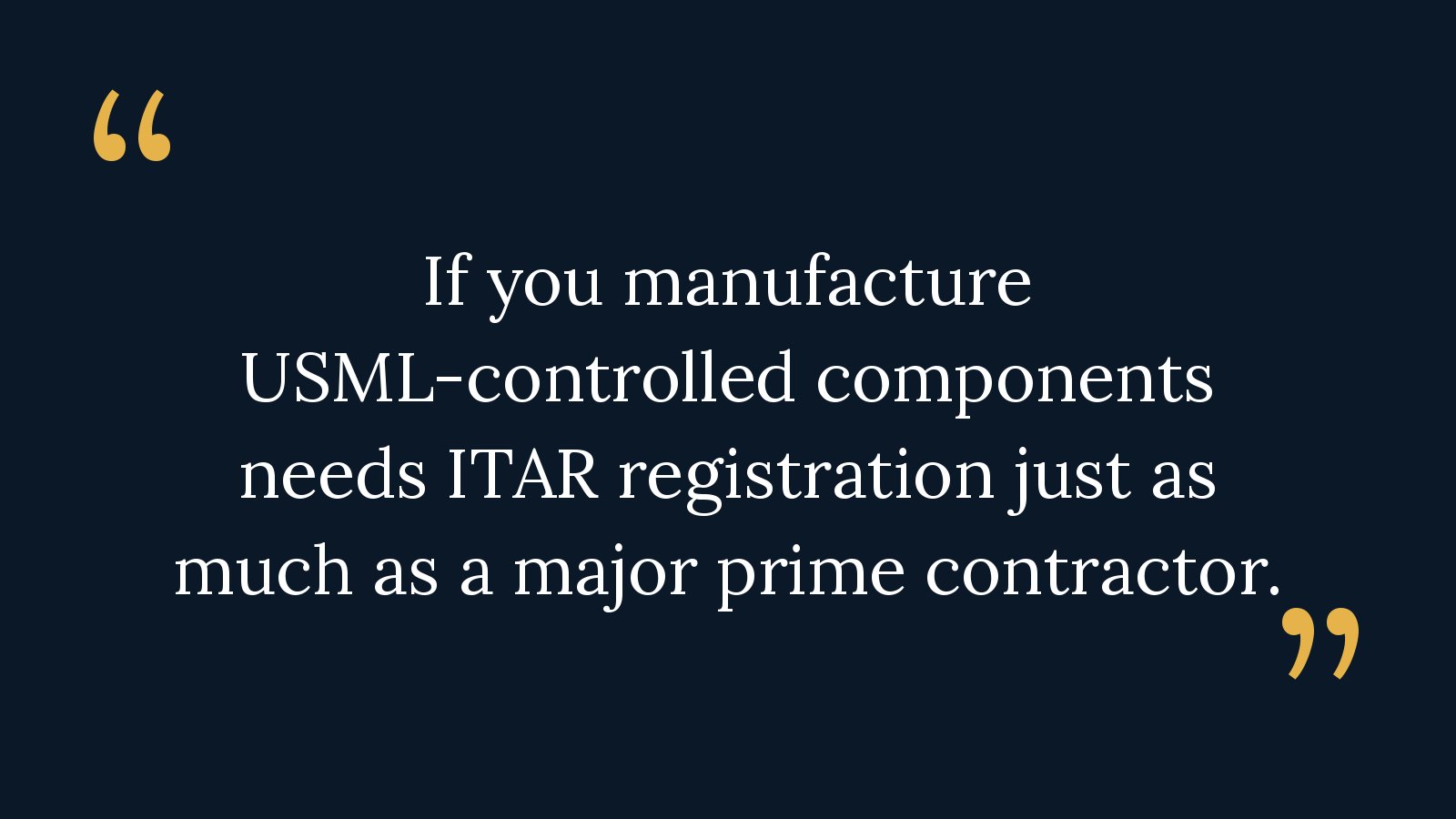
The ITAR Registration Process Step by Step
ITAR registration happens through DDTC's D-Trade portal, an electronic system that replaced paper submissions years ago. The process appears straightforward until you're actually working through it. Then the complexity surfaces.
You'll need a D-Trade account to submit your registration. Creating the account requires establishing credentials and designating empowered officials—individuals authorized to sign export licenses and other submissions on your company's behalf. This designation matters legally. Empowered officials commit the company to representations made to DDTC, and they can face personal liability for false statements.
Information Requirements
The registration application requests detailed business information. You'll provide corporate structure details, ownership information, and descriptions of your defense trade activities. Be specific about USML categories that correspond to your products or services. Generic descriptions create problems. Saying you "support defense contractors" tells DDTC nothing useful. Stating you "manufacture fire control components classified under USML Category IV" provides the clarity DDTC needs to process your registration.
You must disclose information about your senior officers, directors, and other relevant personnel. DDTC wants to know who's running the business and who controls export decisions. This includes information about foreign ownership, control, or influence—the regulatory compliance framework considers foreign influence a risk factor in defense trade.
The application also requires describing your proposed defense trade activities in detail. Manufacturing what, specifically? Exporting which types of items or data? This section shapes DDTC's understanding of your business and determines which compliance standards apply to your operations.
Processing Timeline and Follow-Up
DDTC targets a thirty-day processing timeline for straightforward registrations. Reality varies. Simple registrations for established companies doing clearly defined manufacturing sometimes process quickly. Complex cases—particularly those involving foreign ownership, new business models, or ambiguous USML classifications—take months.
DDTC may issue Requests for Additional Information during processing. These aren't bureaucratic annoyances. They represent DDTC's attempt to understand your business model and ensure you actually need registration. Provide complete, specific responses. Vague answers or boilerplate responses extend processing time and raise questions about whether you understand your own compliance obligations.
Once approved, you receive a registration code and are listed in DDTC's registrant directory. This code appears on export license applications and other submissions to DDTC. Your registration becomes effective on the approval date and remains valid through the annual renewal cycle.
Common Registration Errors That Create Problems
After reviewing registration applications and supporting compliance programs for defense contractors, I've identified patterns in how companies get ITAR registration wrong. These errors range from minor administrative issues to fundamental misunderstandings that compromise entire compliance programs.
Misidentifying Required Activities
Companies frequently mischaracterize what they actually do, leading to registration that doesn't match their activities. I've seen manufacturers register as brokers because they didn't understand the definitions. I've seen brokers skip registration entirely because they thought only manufacturers needed it.
The error often stems from not carefully analyzing activities against ITAR definitions. Defense services particularly confuse companies. If you're providing technical assistance, training, or consulting related to defense articles—even if you never manufacture or export physical items—you need registration. Engineering services, maintenance support, and system integration work all potentially constitute defense services requiring registration.
Inadequate USML Classification
Registration requires identifying which USML categories cover your products or services. Companies routinely get this wrong, either by being too vague or by misclassifying items entirely. The USML's structure doesn't always align with commercial product categories, and some items fall under multiple categories depending on characteristics and end use.
Misclassification creates downstream problems. If your registration states you manufacture Category VIII aircraft when you actually work with Category XI military electronics, your export licenses and other DDTC interactions will contain inconsistencies. During audits or enforcement actions, these discrepancies raise questions about whether you understand what you're controlling.
Classification requires careful review of item characteristics against USML criteria. When in doubt, companies can request commodity jurisdiction determinations from DDTC, which provide official classification guidance. Many companies skip this step to save time or money, then face classification problems later.
Foreign Ownership Disclosure Failures
ITAR registration requires detailed foreign ownership disclosures. Companies must identify any foreign ownership, control, or influence and explain how they mitigate associated risks. This requirement catches companies with complex ownership structures or foreign investors off guard.
The failure I see repeatedly: companies disclose foreign ownership but provide no explanation of their mitigation measures. Simply noting that a foreign entity owns thirty percent of your company isn't sufficient. DDTC wants to know how you prevent inappropriate foreign access to technical data, how you control export decisions, and what structural or procedural safeguards you've implemented.
For companies with significant foreign ownership, DDTC may require special security arrangements as a condition of registration. Negotiating these arrangements takes time and involves detailed security plans. Companies that discover this requirement late in the registration process face delays they didn't anticipate.
Incomplete Empowered Official Designations
Empowered officials hold significant authority and responsibility under ITAR. They sign export license applications, registration renewals, and other submissions to DDTC. Their signatures attest to the accuracy and completeness of information provided to the government.
Companies sometimes designate empowered officials without ensuring those individuals understand their responsibilities. I've encountered situations where empowered officials didn't know they held that designation, much less what it meant. This creates legal risk. When an empowered official signs a license application, they're certifying compliance with ITAR. If the application contains false information—even unknowingly—both the official and the company face potential liability.
Best practice: designate empowered officials who actually understand export controls, have sufficient seniority to make export decisions, and participate actively in compliance program management. Some companies designate their CEO as the sole empowered official, then discover that person isn't available to sign time-sensitive license applications. Designate backup empowered officials to maintain operational flexibility.
Training on Export Control Implementation
Carl delivers practical training sessions on ITAR registration, export licensing, and building defensible compliance programs for the defense industrial base. See all keynote speaking topics or reach out about your event.
Book Carl for Your Event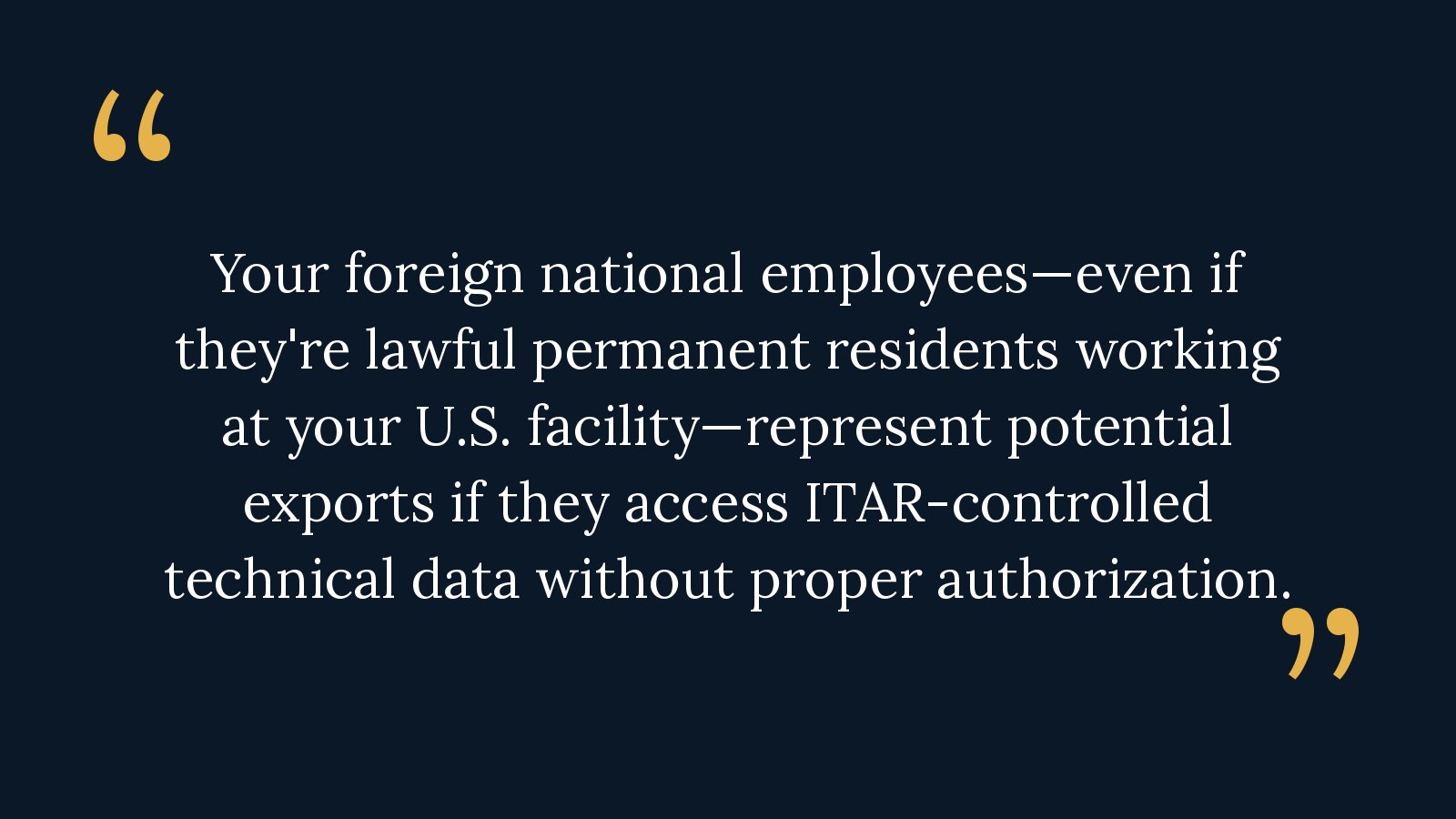
Registration Versus Actual Compliance
Here's where companies create their biggest problems: they treat ITAR registration as the finish line when it's actually the starting gate. Registration establishes your legal authority to operate in the defense trade space. Compliance means actually operating within ITAR's requirements day to day.
Registration doesn't build your compliance program. You need written procedures for export determinations, technology transfer controls, record-keeping practices, and employee training. You need technical controls that prevent unauthorized access to technical data. You need oversight mechanisms that detect and correct violations before they become enforcement cases.
The pattern I see: companies invest significant effort in registration, then assume their compliance obligations are handled. They process exports without licenses. They share technical data with foreign persons without authorizations. They store controlled information on commercial cloud services without considering whether that constitutes an export. All of these activities violate ITAR, and registration provides no protection.
Building Compliance Programs That Work
Effective ITAR compliance programs start with clear policies that address your actual business activities. Generic policies downloaded from the internet don't cut it. Your procedures must reflect how your company manufactures, exports, or brokers defense articles specifically. If you develop software, your procedures need to address source code control, version management, and foreign person access to development environments. If you manufacture hardware, your procedures must cover facility access controls, visitor management, and shipping verification processes.
Training matters more than most companies realize. Every employee who might encounter ITAR-controlled information needs basic export control awareness training. Employees in specific roles—engineering, sales, shipping, IT—need detailed training on export control procedures relevant to their functions. Training can't be a one-time event. Annual refresher training reinforces concepts and addresses procedural updates.
Your compliance program needs ongoing monitoring and auditing. Designate someone responsible for export compliance—either an employee or external consultant—who regularly reviews transactions, interviews personnel, and tests whether procedures work as written. Many companies skip this step until DDTC announces an inspection, then scramble to demonstrate compliance they can't actually verify.
Technology controls matter significantly. If you maintain ITAR-controlled technical data electronically—and most companies do—you need security measures that prevent unauthorized access and detect potential violations. This means access controls tied to authorization status, audit logging that captures data access events, and network segmentation that separates controlled information from general business systems. Storing ITAR data on shared drives accessible to your entire company invites violations.
Registration Renewals and Maintaining Current Status
ITAR registration isn't permanent. You must renew annually and pay renewal fees. DDTC sends renewal notices before your registration expires, but you're responsible for timely renewal regardless of whether you receive notice. Operating with expired registration violates ITAR just as clearly as operating with no registration.
Renewal involves updating your registration information and certifying continued accuracy. This isn't just paying a fee. Review your business activities, ownership structure, empowered officials, and USML categories. If anything changed during the registration year, update your registration during renewal. If foreign ownership increased, disclose it. If you started manufacturing new USML categories, add them. If senior officers changed, update that information.
I've seen companies treat renewal as an administrative checkbox, simply paying the fee without reviewing their registration details. Then during DDTC inspections, investigators discover that registration information hasn't matched actual business operations for years. This creates problems. It suggests to DDTC that you're not taking your registration obligations seriously, which raises questions about your overall compliance posture.
When to Amend Your Registration
Between annual renewals, you must amend your registration within sixty days of significant changes. This includes changes to business name, address, ownership structure, senior officers, or the scope of your defense trade activities. Starting to manufacture new USML categories requires registration amendment. Acquisition by a foreign entity requires immediate disclosure and potentially new foreign ownership mitigation measures.
Many companies miss the sixty-day amendment requirement. They assume they can wait until the next annual renewal to update information. This violates ITAR's registration maintenance requirements. During enforcement actions, DDTC often finds that companies failed to amend registrations when circumstances changed, creating additional violations beyond whatever export control issues triggered the investigation.
What Registration Failures Mean for Leadership
ITAR registration failures carry consequences beyond regulatory penalties. They affect your ability to compete for contracts. Many defense prime contractors now require proof of current ITAR registration before awarding subcontracts. Operating with expired or incorrect registration can cost you business opportunities.
Registration problems also signal broader compliance gaps to customers and regulators. If you can't maintain current, accurate registration—a relatively straightforward administrative requirement—it raises questions about whether you can handle the more complex aspects of export compliance. During CMMC assessments, auditors examine ITAR registration status as part of evaluating your overall security and compliance posture.
From a leadership perspective, ITAR registration represents a foundation element of defense trade compliance. Getting it right demonstrates that you understand the regulatory framework and take your obligations seriously. Getting it wrong—or treating it casually—suggests compliance gaps that likely extend into operational practices.
The companies that handle ITAR registration well treat it as part of a broader compliance strategy. They understand that registration connects to export licensing, technology transfer controls, record-keeping, and security measures. They recognize that defense trade compliance isn't a one-time project but an ongoing operational requirement that needs leadership attention and resource allocation.
For CISOs and compliance leaders, ITAR registration provides an opportunity to demonstrate that your organization operates with precision in regulated environments. It's a chance to establish clear processes, maintain accurate records, and prove that when you make representations to regulators, those representations reflect actual business practices. That credibility matters when DDTC comes knocking during inspections or when customers evaluate your compliance program during contract negotiations.
Registration done right becomes invisible infrastructure that supports business operations. Registration done wrong becomes a crisis that diverts resources, damages customer relationships, and creates legal exposure. The difference lies in treating registration as a serious compliance obligation rather than a bureaucratic formality to rush through. Your approach to registration often predicts your approach to the harder compliance challenges that follow.