
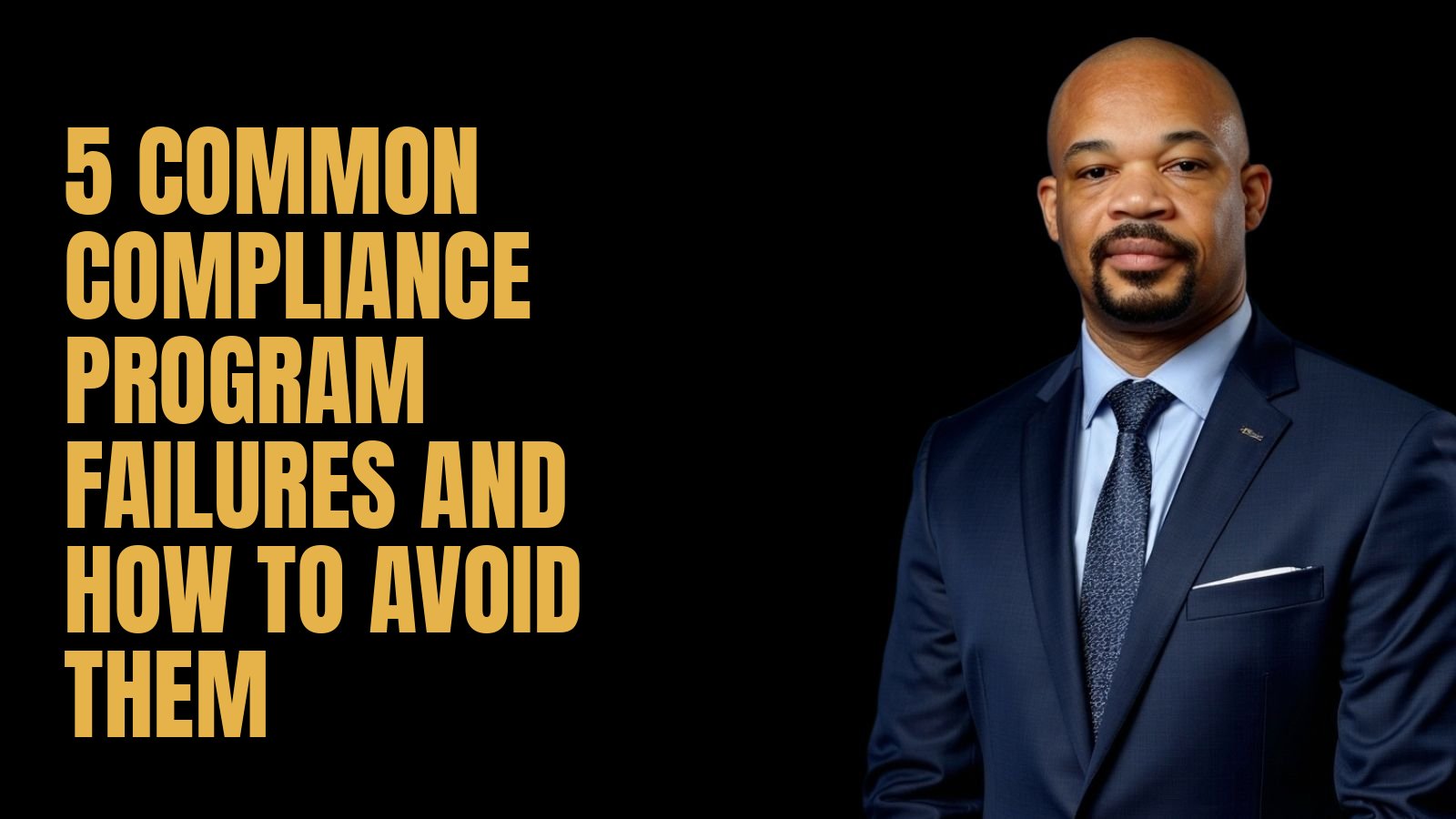
I've investigated dozens of compliance program failures. Not the kind that make headlines—those are rare—but the quiet kind that erode trust, waste budget, and leave organizations exposed despite passing audits. The pattern is consistent: organizations invest significant resources in compliance programs that exist primarily on paper. When an incident occurs or a regulator takes a closer look, the gap between documentation and reality becomes painfully obvious.
These failures share common characteristics. They're predictable, preventable, and surprisingly persistent across industries. I've seen the same mistakes in healthcare organizations pursuing HIPAA compliance, defense contractors working toward CMMC certification, and companies navigating state privacy laws. The regulatory framework changes, but the underlying problems remain the same.
Understanding these patterns matters because compliance failures don't just risk penalties. They consume executive attention, damage customer relationships, and create technical debt that compounds over time. More than that, they represent a missed opportunity: a well-structured compliance program creates operational discipline that strengthens the entire organization.
Paperwork Without Practice: When Documentation Becomes the Goal
The most common compliance failure I encounter is treating documentation as the finish line rather than the starting point. Organizations build impressive policy libraries, complete detailed spreadsheets, and generate hundreds of pages of procedures. Then they wonder why auditors ask uncomfortable questions about actual implementation.
This isn't about bad faith. Most compliance teams genuinely believe they're doing the right thing. The problem is structural: compliance professionals are often measured by documentation deliverables, not operational outcomes. When your job security depends on producing a System Security Plan by quarter-end, you produce the System Security Plan. Whether anyone reads it, understands it, or follows it becomes someone else's problem.
I worked with a federal contractor who had invested more than $200,000 in NIST 800-171 documentation. Their policies were comprehensive, their procedures detailed, their system security plans professionally formatted. During my assessment, I asked a systems administrator to walk me through their patch management process. He pulled up a completely different procedure than what appeared in their documentation—one the team had actually developed because the "official" version didn't match their environment.
This disconnect between documented process and actual practice is dangerous for two reasons. First, it creates audit risk. Assessors don't just review documents; they interview staff and observe operations. When those don't align with what's written, you fail regardless of how good your paperwork looks. Second, it signals to employees that compliance is performative. Once your team recognizes that policies exist for show, you've lost the cultural foundation that makes any security program work.
What Implementation Actually Requires
Real implementation means three things that documentation alone cannot deliver: training that changes behavior, technical controls that enforce requirements, and verification that confirms both are working. Your incident response plan isn't implemented until your team has practiced it under realistic conditions. Your access control policy isn't implemented until your systems enforce it automatically and you're monitoring exceptions. Your vendor management program isn't implemented until you've actually terminated or remediated a vendor who failed to meet your standards.
The gap between documentation and implementation shows up clearly in audit readiness. Organizations that treat compliance as a documentation exercise scramble before every assessment, updating policies to match current reality and coaching staff on what to say. Organizations that focus on implementation treat audits as validation of what they're already doing.
Tools Without Strategy: The Technology Trap
The second pattern I see repeatedly: organizations buying compliance tools before defining their compliance strategy. The vendor narrative is seductive: deploy our GRC platform, and compliance becomes manageable. The reality is messier.
I'm not arguing against compliance tools. Good technology solves real problems. But I've watched organizations spend six figures on GRC platforms that sit mostly unused because no one defined what processes the tool should support, who would maintain it, or how it would integrate with existing workflows. The tool becomes another piece of shelfware, occasionally updated before audits but ignored in daily operations.
The failure pattern typically looks like this: Leadership recognizes compliance is becoming unmanageable. Someone attends a conference or receives a persuasive sales pitch about a platform that will "automate compliance." The organization purchases the tool, assigns implementation to someone who already has a full workload, and expects transformation. Six months later, they have an expensive system that's either over-engineered for their needs or underconfigured because no one had time to set it up properly.
What's missing is strategy. Before you evaluate tools, you need clear answers to foundational questions: Which regulations apply to your organization and how do they interact? Where are your current compliance failures creating actual risk rather than just inconvenience? What processes do you need to standardize across teams? How will you measure whether your compliance program is working?
A mid-sized healthcare organization I worked with had purchased three different compliance platforms over five years, each time hoping the new tool would solve their HIPAA compliance challenges. None did, because their fundamental problem wasn't technological—it was that different departments had conflicting interpretations of what their compliance obligations required. No tool can automate away that kind of strategic ambiguity.
When Technology Actually Helps
Tools add value when they support clearly defined processes. If you've documented your vendor risk assessment workflow and identified that tracking vendor responses is creating bottlenecks, a vendor management platform makes sense. If you're managing multiple compliance frameworks and struggling to track which controls satisfy which requirements, a mapping tool delivers real efficiency. If you need to demonstrate continuous monitoring to satisfy audit requirements, automated evidence collection becomes essential.
The key is specificity. "We need to get compliant" doesn't justify tool selection. "We need to track 437 CMMC controls across eight systems with evidence collection every 90 days" does. Start with the process, identify the pain point, then find technology that addresses that specific problem.
Speaking on Building Compliance Programs That Work
Carl delivers keynotes on regulatory compliance strategy, helping organizations move beyond checkbox exercises to programs that create real operational value. His presentations draw on years of hands-on CISO experience across regulated industries.
Book Carl to Speak
Siloed Compliance: When Nobody Owns the Whole Problem
The third common failure is treating compliance as someone else's job. Legal handles privacy regulations, IT security manages technical controls, HR deals with workforce requirements, and operations focuses on business processes. Each group executes their piece, and everyone assumes the gaps between domains are covered by someone else. They're usually not.
This siloed approach creates blind spots that become obvious only during incidents or audits. I've seen organizations where legal negotiated contracts requiring specific security controls that IT security had never implemented—and neither team had a process for confirming alignment. I've watched privacy teams build data inventory processes that couldn't capture the information security actually needed to configure controls. I've reviewed business continuity plans developed by operations teams that contradicted the incident response procedures maintained by security.
The problem isn't that different departments have different expertise—that specialization is necessary. The problem is the absence of coordination mechanisms that ensure those different domains connect into a coherent whole. In my experience, the organizations that manage this well have two things in common: clear executive ownership of compliance outcomes and regular cross-functional working sessions that surface gaps before they become findings.
Breaking Down the Silos
Cross-functional compliance management requires someone with authority to convene stakeholders and accountability for the overall outcome. That's often a Chief Compliance Officer, CISO, or General Counsel, depending on the organization's structure and primary regulatory drivers. The specific title matters less than having defined ownership and executive support.
Equally critical are structured touchpoints between teams. I recommend monthly compliance coordination meetings with representatives from legal, IT security, privacy, HR, and relevant operational units. Not status updates—actual working sessions where teams identify dependencies, resolve conflicts, and pressure-test whether their individual pieces connect. When legal is negotiating a customer contract that requires SOC 2 Type II certification, security needs to know before the contract is signed. When IT is deploying a new collaboration platform, privacy needs to confirm it doesn't create new data protection obligations. These conversations don't happen automatically.
For organizations navigating complex regulatory environments—defense contractors managing both ITAR compliance and CMMC requirements, healthcare organizations dealing with HIPAA and state privacy laws, technology companies juggling multiple sectoral regulations—this coordination becomes even more essential. The frameworks overlap in ways that create both efficiency opportunities and compliance risks, but only if someone is actively managing the intersections.
Weak Executive Engagement: When Leadership Doesn't Lead
The fourth pattern might be the most predictable: compliance programs fail when executives treat them as technical exercises rather than business imperatives. This manifests in several ways, all of them problematic.
Sometimes it's passive disengagement. Leadership approves compliance initiatives, allocates budget, maybe even attends kickoff meetings. But when trade-offs emerge—compliance requirements that slow down product releases, security controls that complicate user experience, vendor requirements that increase costs—those compliance considerations get deprioritized. The message to the organization is clear: compliance matters until it conflicts with something that matters more.
Other times it's active resistance disguised as pragmatism. Executives push back on compliance requirements as excessive, ask for "creative" interpretations of regulations, or pressure teams to find cheaper alternatives to necessary controls. I've sat in meetings where a CFO argued that their organization didn't "really" need to comply with a specific regulation because enforcement was rare. That's not risk management; it's gambling with other people's licenses.
The most insidious version is checkbox leadership. Executives want to be told they're compliant, but they don't want to understand what that means or what it requires. They view compliance status as a binary output rather than an ongoing operational state. This creates pressure on compliance teams to oversimplify, to provide assurance that isn't supported by evidence, and to hide problems rather than escalate them.
The pattern I see in organizations with effective compliance programs is different: executives who ask informed questions. Not "Are we compliant?"—that question is almost meaningless without context—but "What are our highest-risk compliance gaps?" and "What would it take to close them?" and "How do we know our controls are working?" These leaders understand that compliance is a risk management function, not a certification you earn once and forget about.
What Meaningful Executive Engagement Looks Like
Effective executive engagement starts with education. If your leadership team doesn't understand your regulatory obligations, they can't make informed decisions about compliance trade-offs. That doesn't mean executives need to become technical experts, but they do need to understand which regulations apply, what the consequences of non-compliance look like, and what level of investment is necessary to maintain an acceptable risk posture.
For organizations exploring the ROI of a real compliance program, executive engagement often determines whether the investment gets made at all. Compliance isn't free, but neither are the alternatives: regulatory penalties, customer churn, incident response costs, and reputational damage. Executives who understand this business case make better resource allocation decisions.
It also requires regular, substantive reporting. Not dashboard metrics that hide complexity, but honest assessments of compliance posture, emerging risks, and resource gaps. I advise compliance leaders to brief executives quarterly on their organization's compliance status, with clear explanations of what "compliant" means in their regulatory context, what compliance failures would look like, and what investments or changes would meaningfully reduce risk. Those briefings should include both current state and forward-looking risks—regulations that are changing, new business activities that create new obligations, emerging enforcement patterns.
Compliance Strategy for Executive Audiences
Carl helps boards and executive teams understand what effective regulatory compliance requires, translating technical requirements into strategic decision points. See all keynote speaking topics or reach out about your event.
Book Carl for Your Event
Treating Compliance as a Destination: The Certification Trap
The fifth failure might be the most fundamental: treating compliance as something you achieve rather than something you maintain. Organizations focus intense effort on passing an initial audit or earning a certification, then relax once they've cleared that hurdle. They're surprised when their next assessment identifies significant gaps or when an incident reveals that controls have degraded.
This pattern is particularly common with compliance frameworks that involve third-party assessments. Companies prepare extensively for CMMC certification, SOC 2 audits, or ISO 27001 assessments. They remediate findings, implement missing controls, and document everything properly. They pass the assessment, celebrate the achievement, then shift focus back to other priorities. Six months later, the security controls that were barely adequate during the assessment have deteriorated further, documentation is outdated, and nobody's monitoring whether the controls are still working.
The problem is the mental model. Compliance isn't a project with a defined endpoint; it's an operational state that requires continuous maintenance. Your access controls don't stay configured correctly without regular review. Your vendor assessments don't remain current without periodic updates. Your policies don't reflect actual practice without ongoing validation. The organizations that struggle with compliance failures are usually the ones that stop doing the work once they've passed an audit.
I worked with a defense contractor who achieved CMMC Level 2 certification, then laid off the contractor who had managed their preparation effort. Eighteen months later, they faced a customer audit and discovered that half their documented security controls were no longer implemented. Employee turnover, system changes, and process drift had eroded their security posture. They were still "certified" according to their certificate date, but they were no longer compliant with the requirements that certification represented.
Building Sustainable Compliance Operations
Sustainable compliance requires embedding compliance activities into regular operations rather than treating them as special projects. That means scheduled reviews, automated monitoring where possible, clear ownership of ongoing responsibilities, and consequences when those responsibilities aren't met.
Practically, this looks like quarterly access reviews that actually happen on schedule, monthly vulnerability scanning with defined remediation SLAs, annual policy reviews that result in updates reflecting current practice, and regular training that reinforces compliance requirements. It means someone is responsible for maintaining your evidence repository, updating your documentation when systems change, and tracking whether your controls are producing the outcomes you expect.
For frameworks that require periodic reassessment—CMMC every three years, SOC 2 annually, ISO 27001 surveillance audits—organizations should operate as if they're always under assessment. If your security controls are strong enough to pass an audit at any given moment, then the scheduled assessment becomes validation rather than a stressful event requiring preparation sprints. That's the difference between treating compliance as a destination and treating it as an operational discipline.
The Common Thread: Discipline Over Documentation
These five compliance failures share a common characteristic: they prioritize appearances over substance. Organizations create the artifacts that signal compliance—policies, certifications, platforms, organizational charts—without building the operational discipline those artifacts are meant to represent.
Real compliance programs work differently. They start with a clear understanding of what regulations require and why those requirements exist. They implement controls that address actual risks in the organization's specific environment, not generic best practices copied from templates. They verify that those controls are working through regular testing and monitoring, not assumptions based on policy documents. They adapt when business operations change, regulations evolve, or gaps emerge.
This requires more than good intentions. It requires dedicated resources, executive support, cross-functional coordination, and sustained attention over time. It requires treating compliance as a core business function rather than an administrative burden. For organizations that depend on regulatory compliance—whether that's to win contracts, satisfy customers, avoid penalties, or maintain licenses—that investment is not optional.
The good news is that these compliance failures are all correctable. Organizations that recognize these patterns in their own programs can make targeted changes that meaningfully reduce risk. That starts with honest assessment: which of these failures describe your current state? Where is the gap between your documented compliance program and your operational reality? What would it take to close those gaps?
Moving Beyond Checkbox Compliance
The organizations I've seen succeed at compliance don't treat it as separate from their normal operations. Their security controls are the way they actually operate, not additional steps layered on top of real workflows. Their policies describe what they do, not what they aspire to do. Their audit preparation is minimal because they maintain evidence continuously rather than scrambling to collect it on demand.
Getting there requires changing how leadership thinks about compliance investment. The question isn't "What's the minimum we need to spend to pass this audit?" but "What level of compliance discipline makes sense given our risk tolerance and business model?" For some organizations—those in highly regulated industries, those with sophisticated customers who conduct vendor assessments, those operating in environments where compliance failures create existential risk—substantial compliance investment is justified. For others, a lighter approach makes sense, as long as it's honest about the residual risks that creates.
What doesn't work is pretending you have a mature compliance program when you've only built the facade. Auditors eventually notice. Regulators eventually investigate. Customers eventually ask harder questions. And when they do, the gap between your documented controls and your actual practices becomes a liability that's difficult to explain and expensive to fix.
The path forward starts with acknowledging where that gap exists in your organization. Not in a spirit of blame—these compliance failures are common precisely because they're easy to fall into—but with a commitment to fixing them systematically. That means reviewing your documentation against your actual practices and updating whichever is wrong. It means defining what your compliance strategy actually is before buying tools to support it. It means creating coordination mechanisms so different teams aren't working against each other. It means giving executives the information they need to make informed compliance decisions. And it means treating compliance as an ongoing operational state rather than a project you complete.
None of this is easy. If it were, these compliance failures wouldn't be so common. But the difficulty doesn't change the necessity. For organizations operating in regulated environments, the question isn't whether to build a real compliance program—it's whether to do it proactively or wait until a failure forces your hand. The organizations that choose the former consistently outperform those that wait.